High-Order Neural Connectivity Lab
A research group at Yonsei University developing computational tools for mapping the brain's white matter architecture through high-order fiber tracking algorithms and differential geometry.
Mapping the Brain's White Matter Highways
White matter tracts are the brain's communication highways — bundles of myelinated axons connecting every region of the cortex. HINEC reconstructs these pathways from diffusion-weighted MRI by tracking how water molecules diffuse along fiber directions, using the Stejskal-Tanner equation and fractional anisotropy as the guiding signal.
Our pipeline runs FACT, RK4, and RKF45 adaptive tractography algorithms on SPD-constrained diffusion tensors, with atlas-based parcellation to generate region-to-region connectivity matrices for neuroscience and clinical research.
Clinical Translation of Tractography Science
We envision a future where high-order fiber tracking biomarkers become routine clinical tools for pre-surgical planning, traumatic brain injury assessment, and monitoring neurodegeneration.
Researchers
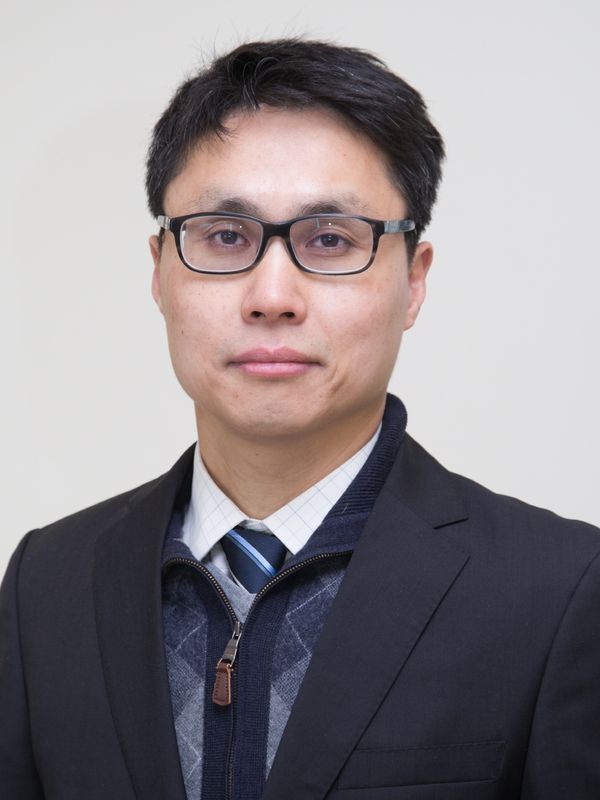
Dr. Sehun Chun
Associate Professor of Applied Mathematics, Underwood International College (UIC), Yonsei University. Director of the HINEC Project. Adjunct Faculty, Artificial Intelligence, POSTECH.
- Ph.D. Applied Mathematics, Brown University, 2008
- M.S. Applied Mathematics, Brown University, 2005
- M.S. Mathematics, Purdue University, 2003
- B.S. Mech. & Aero. Engineering, Seoul National University, 1999
Woosung Choi
Supports the lab's research operations and assists the principal investigator. Helps curate lab activities, coordinate research efforts, and maintain the overall direction of ongoing projects.
Taehyun Han
Leads the development of the core HINEC pipeline — from preprocessing and tensor estimation to fiber tracking algorithms and visualization modules.
Miras Koilybay
Builds and maintains the lab's web presence and contributes to AI-related initiatives. Works at the intersection of research communication and applied machine learning.
Sungmin Moon
Onboarding to the HINEC project and the broader research landscape of diffusion MRI tractography. Currently getting familiar with the pipeline, codebase, and theoretical foundations.
Milestones
RKF45 Adaptive Tractography
Adaptive step-size Runge-Kutta-Fehlberg algorithm integrated into HINEC for error-controlled fiber tracking.
IronTract & ISMRM Validation
Pipeline validated against IronTract and ISMRM 2015 scoring framework for tractography accuracy benchmarks.
Anatomically Constrained Tractography
WM/GM/CSF tissue masks integrated for biologically valid fiber termination.
T1-Enhanced Brain Extraction
epi_reg-based T1-to-DWI registration achieving 30-50% improved brain boundary accuracy.
YAML Configuration System
Full YAML-based parameter configuration for reproducible pipeline runs.
HINEC Lab Founded
Lab established at Yonsei University with initial MATLAB pipeline and FACT tractography.